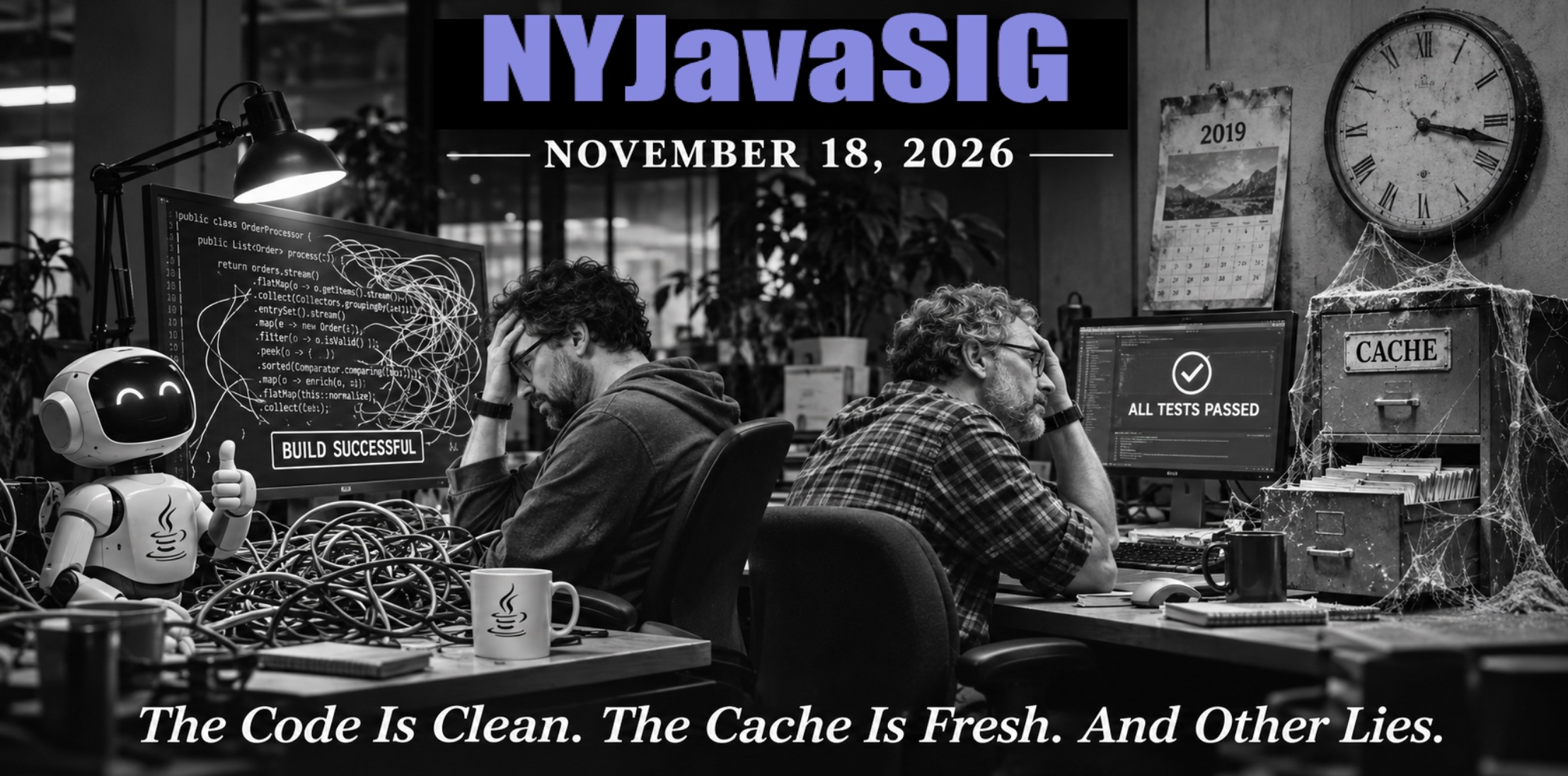
The Code is Clean. The Cache is Fresh. And Other Lies. WED Nov 18

More and more development organizations are relying on AI to create or even maintain big parts of their software systems.
A recent Stanford study shows that the architectural quality of AI-generated code is closely tied to the structure of the codebase it works on. For greenfield projects, the frontier models generate pretty decent code. But if they work on a big ball of mud, the output is not better than the input. Even worse, if an AI-generated change causes a complex issue in a rotten codebase, there is a good chance only the human in the loop can fix it.
This is obviously much harder if the code is hard to understand and difficult to read. So, for this reason alone, I would argue that architecture and clean code still matter, even more than before. If that is true, we need ways to guide LLMs to always produce well-structured, easy-to-understand code.
For legacy codebases, that means that we need to untangle them first before trying to implement major changes. This talk explains how an initial research session with Claude led to implementing a powerful MCP server that helps coding agents do the right thing, even when the underlying codebase isn’t ideal.

Alexander von Zitzewitz is a serial entrepreneur in the software business and one of the founders of hello2morrow, an ISV specializing in static analysis tools that can enforce architecture and quality rules in the development and maintenance of software systems. He has been in the industry since the early 1980s, focusing on the role of software architecture and technical quality in successful project outcomes. In 2008, he moved from Germany to Massachusetts to build hello2morrow’s business in North America. Recently his focus moved to software architecture in the context of AI generated code.
We’ve all been there. Your Java application returns the wrong data, but nothing appears broken. No exceptions, no alerts, and every test passes. After hours of debugging, you finally find the culprit: a cache that’s doing exactly what you told it to do. Months or even years ago, someone picked a Time to Live (TTL) value, and nobody questioned it since. Sound familiar? The problem gets worse when that same TTL applies to data that changes at different rates. Set it too short, and you’re making unnecessary calls to external systems. Set it too long, and you’re serving stale data. And when those external systems don’t tell you when something has changed, your cache can quietly return incorrect results without anyone noticing.
In this session, we’ll walk through a real caching system built on these assumptions, what went wrong, and what we learned trying to fix it. We’ll explore the tradeoffs between data freshness, performance, and the cost of validating cached data against external systems you don’t control. Should different attributes have different expiration times? What happens when checking whether data is still valid costs almost as much as fetching it again? And how can you detect stale data before your users do? We’ll look at practical approaches, their limitations, and why cache correctness is often harder than it first appears.

Neha Sardana is a software developer specializing in Java applications, with over a decade of experience. She is currently Vice President at JPMorgan Chase and JUG (Java User Group) Leader for Garden State JUG, New Jersey, and NYJavaSIG, New York. She has worked in financial services for almost 15 years in both Europe and the US.
She is a technologist and an OSS enthusiast and loves to talk and blog about all things open source.
ArchConf 2026 returns to the Opal Sands Resort in Clearwater Beach, FL, December 7–10, bringing together software architects, senior engineers, authors, and industry experts for four days of hands-on learning and technical discussion. Attendance is capped at just 300 practitioners, creating an unusually interactive environment with 75+ production-focused sessions and workshops covering agentic AI and coding agents, distributed systems, event-driven architecture, MLOps, cloud security, and more. Registration also includes 25 NFJS Virtual Workshop Credits for continued training throughout 2027, meals and networking events, and a 12-month pass to session recordings. NYJavaSIG/JUG members can save an additional $500 with promo code arch26jug5, and teams can take advantage of a Buy 4, Get 2 Free offer. Learn more and register at https://archconf.com/.
Sponsors of the NYJavaSIG
Thanks to our sponsors for supporting the Java community!




The New York Java Special Interest Group (NYJavaSIG), based in New York City, is a unique community that brings together Java developers from the tri-state region and worldwide. Through our regular monthly general meetings, bi-monthly specialty workgroup meetings, our website, and social media presence, we provide a space for members to share tips, techniques, knowledge, and experience, fostering a collaborative and innovative environment unmatched in the Java community.
Contact Info
info@javasig.com
Follow Us